From The Wire (June 4 , 2026)
A stark reality of the India-Nepal relationship has been the incessant meddling of the former in politics and governance of the latter.
New Delhi’s foreign policy community of diplomats, scholars and think-tankers would be perplexed by the attitude of the newly-formed Kathmandu government of prime minister Balendra Shah. Given the longtime propensity of New Delhi to be overbearing and didactic towards Kathmandu, Shah’s cold shoulder, including the unwillingness to travel to New Delhi on an official visit, would have left heads spinning.
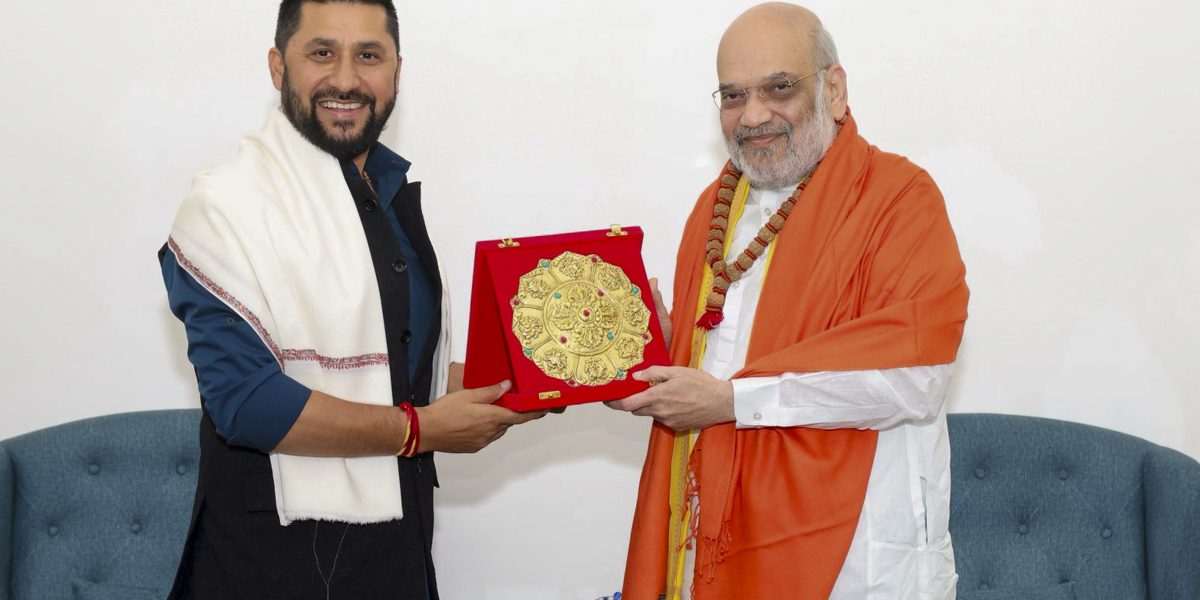
As an alternative, the Bharatiya Janata Party (BJP) is hosting Rabi Lamichhane, chairman of the Rashtriya Swatantra Party (RSP) of which prime minister Shah is also a recently inducted member. The RSP is the largest force in Parliament by far following the elections of March 5, and New Delhi seems to have decided to lay out the red carpet for its chairman, simply to have someone to talk to.PlayNextMute
Given the dissonance evident in governance under a new party without ideological mooring, but seeming to lean towards neo-liberalism, and a suspected rift between the chairman and prime minister, foreign affairs have been relegated to the level of false bravado. This swaggering is also evident in Lamichhane’s article in an Indian newspaper the day after he arrived from Kathmandu, which does not at all delve into core bilateral issues that need resolution through respectful dialogue.
The flamboyance of Kathmandu’s new political class does not reassure those who believe that the Nepal-India relationship must be stabilised on the platform of mutual interest and reciprocity. The RSP Chairman’s visit comes even as Nepal’s polity has been in turmoil following PM Shah’s claim in Parliament last week that Nepal, too, had encroached on Indian territory.
Under the circumstances, addressing the critical bilateral issues described below will have to wait another day, after the political dust settles in Kathmandu. In reality, the journey back from the blockade of 2015 is yet to begin.
Nepal-India matters
There has been a steady erosion in the Nepal-India diplomatic ties over the decades, a contrast from the 1950s, when the prime ministers of the two countries were in a trusting relationship. Time has taken its toll, with Kathmandu greatly weakened vis-à-vis New Delhi, overwhelmed by heavyweight Indian diplomacy, intelligence-wallahs running amok, and the latest intrusion in the form of Hindutva propelled by the Rastriya Swayamsevak Sangh (RSS).
Amidst this downturn, Kathmandu is asked to demand reciprocity from India on all bilateral matters, because sovereignty should not have regard for size or exceptionalism. Resetting the bilateral relationship requires Kathmandu’s intelligentsia to be more diligent in understanding what is in Nepal’s interests.
Water Resources: Politicians and bureaucrats in Kathmandu have primarily viewed Nepal’s water resources in terms of hydropower production and export. The Shah government reiterated this strategy in its 100-point work agenda, which was released shortly after assuming power and focussed on producing and selling electricity to India.
This perspective overlooks the fact that New Delhi’s main interests are high dams and large reservoirs in Nepal. Due to urbanisation and irrigation demands of the Ganga plain, there is a need to pond monsoonal water, hence the eye on Nepal’s deep valleys. Building high dams on the Kosi, Gandaki, Karnali and other rivers is New Delhi’s undisclosed top priority when it comes to Nepal.
Limpiyadhura: The face-off over the Limpiyadhura Triangle has taken bilateral relations to a never-before low. New Delhi refuses to talk on Kathmandu’s territorial claims on the Lipulek-Kalapani-Limpiyadhura region based on the Sugauli Treaty of 1816 defining the Mahakali as a border river.
As for how to overcome this bilateral chasm, the way forward is suggested by New Delhi’s own claims on territories not in possession – the Aksai Chin and Azad Kashmir regions have remained on the official map of India for seven decades without New Delhi exercising control. Likewise, there is nothing to stop Kathmandu from maintaining its claim over the Limpiyadhura Triangle, remaining open to dialogue on the matter, while otherwise working to normalise ties.
EPG: In February 2016, the governments of Nepal and India together constituted the Eminent Persons Group (EPG) to update and strengthen bilateral ties by forging common understandings. Although the report was completed unanimously in July 2018 by respected intellectuals selected by the two governments, prime minister Narendra Modi was apparently persuaded that the whole exercise should be abandoned.
Modi’s reticence is unwarranted because neither government is obliged to accept the recommendations of the EPG. If New Delhi continues to stonewall, good sense demands that Nepal’s Government move to unilaterally release the unanimously adopted report, already a decade old.
Agnipath Scheme: Although Nepalis have served in the British Army since 1818, the former Gurkha Brigade was split up by a tripartite agreement following Indian independence in 1947. The system of officially sanctioned foreign military recruitment persisted even as Nepal developed as a modern nation-state. Nepali citizens have fought under the Indian flag in conflicts involving China and Pakistan, as well as in counter-insurgency operations in Sri Lanka under the Indian Peace Keeping Force (IPKF).
The question arises: How can a member country of SAARC allow its citizens to raise arms on behalf of one neighbour against another?
PM Modi ‘gifted’ Nepali authorities an excuse to stop Gorkha recruitment by unveiling the Agnipath military enlistment programme in 2022. The scheme provided Kathmandu authorities with the opportunity to quietly halt Gorkha recruitment on the grounds that it violated the 1947 agreement. The government of newly-crowned PM Shah should consider a formal announcement, so that Nepal’s citizens do not go into battle for India as ‘agniveers’.
Geopolitics and economics
Nepal’s attempts to develop independent links to China as the great neighbour to the north is invariably questioned by New Delhi’s Raisina Hill officialdom and allied think tanks. Historically, Nepal’s links to the Tibetan plateau are just as ‘special’ as it is to Ganga plain. Nepal’s economy was compelled to pivot southward due to colonial mercantilism in the early 1900s, but in these days of evolved transport and infrastructure, Kathmandu need no longer perceive itself as ‘India-locked’.
Eyeing Beijing: New Delhi restricts the import of hydropower imports from Nepal if there is any ‘whiff’ of Chinese involvement in construction or financing. A Nepali airline with Chinese investment is denied access to airports in India, while two new international airports (Pokhara and Bhairahawa) are prevented from being connected to Indian cities because of Chinese involvement in their construction.
What would Beijing be making of all this, also that New Delhi does not want Nepal to have anything to do with the Belt and Road Initiative? Kathmandu’s engagement with Beijing on commerce, tourism, infrastructure and development finance cannot be regarded as any kind of geopolitical ‘tilt’. Such an attitude only signals degraded geopolitical self-confidence in New Delhi. Given how closely India’s own economy is intermeshed with China’s, New Delhi interlocutors who insist on Nepal maintaining economic distance from China must reflect.
Migrant Labour: As far as Nepal’s economy is concerned, the New Delhi discourse tends to present Nepal as a weak neighbour, and the internalisation of this stereotype by Kathmandu polity has promoted a sense of inferiority. However, a study of commerce and remittances demonstrates that Nepal’s economy is an unrecognised boon for India.
While Nepali citizens working as migrant labour in India is frequently cited as evidence of Nepal’s poor economic standing, in fact Nepal is the seventh-largest economy receiving migrant labourers from India. The rural economies of India’s poorest regions, from Jharkhand to Bihar and Odisha, are supported by the money that Indian workers in Nepal send home.
Money repatriated by Indian migrants working in Nepal is said to hover at around USD 3 billion per annum, while according to one estimate Nepali migrants in India send back no more than a third of that amount. Given that Nepal is the eleventh-largest export destination for Indian goods and services, second only to Bangladesh in South Asia, New Delhi’s commentators and geo-strategists must learn to regard Nepal’s economic significance for India.
Polarising intervention
A stark reality of the India-Nepal relationship has been the incessant meddling of the former in politics and governance of the latter. While pressures are applied economically, diplomatically as well as through the aegis of intelligence agencies, the export of political ‘Hindutva’ over the last ten years has posed an even greater threat because the aim is to infiltrate Nepali society’s cultural fabric and poison inter-community relations.
Sanatan Tradition: Social divisions based on an exclusivist reading of the sanatan tradition, centred on a particular interpretation of the worship of Shri Ram, have promoted social rigidities in India’s north and centre. Nepal’s faith-based traditions have not yet been overtaken by the RSS ideology, but it would be correct to say that the organisation is currently in overdrive in the country.
Not satisfied with working through Nepali organisations with Hindutva leanings, the RSS has moved to establish its own base in Kathmandu. The office of the Hindu Swayamsevak Sangh (HSS) has been operating from a building named ‘Keshav Dham’ in Kathmandu’s Gujeswari locality, with Indian citizens serving as organisers and propagators.
Successive governments in Kathmandu have been indifferent to the increasing polarising threat of ‘Hindutva’ on Nepal’s societal fabric. Nepal retains till today the kind of syncretistic society that north and central India enjoyed before the rapid rise of Hindutva, but neither PM Shah’s personal team of advisors nor the RSP rank and file have shown themselves as alert to the dangers posed by the propagation of exclusivist faith-based ideology.
The HSS’s activities in Nepal are not like those carried out bey an ashram or a spiritual group. It is a political organisation created to promote the ideology of a political force based in a neighbouring country. The Shah Government should show clarity and courage in responding to RSS designs on Nepali society, and order that the ‘HSS Nepal Central Office’ pull down its shutters.
Kanak Mani Dixit is founding editor of Himal, the Himalayan periodical that transformed into a Southasian publication.